Which perspectives are considered when plans are made that affect the landscape, and all its inhabitants, in a protected area? How can multiple viewpoints – including lesser heard voices – be brought together, with arts practice as a tool for research, conversations and collaborations?
WATERSHED used creative processes to inspire conversations about land use, nature and culture, and bring divergent voices together in an ongoing dialogue about landscape care and change in the Ullswater valley. The project also aimed to open up discussions about human relationships with ‘nature’ and finding balance moving forwards.
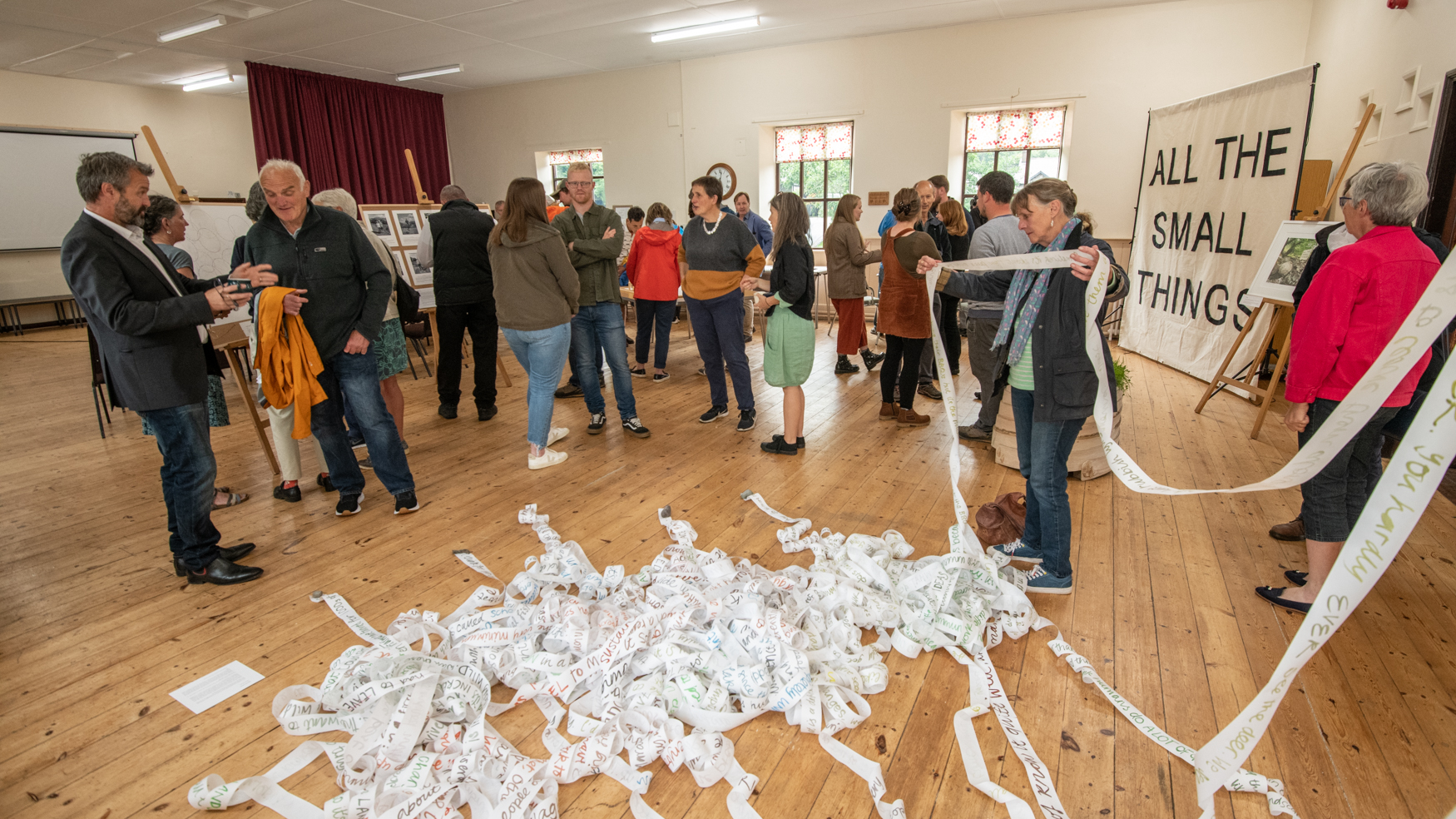
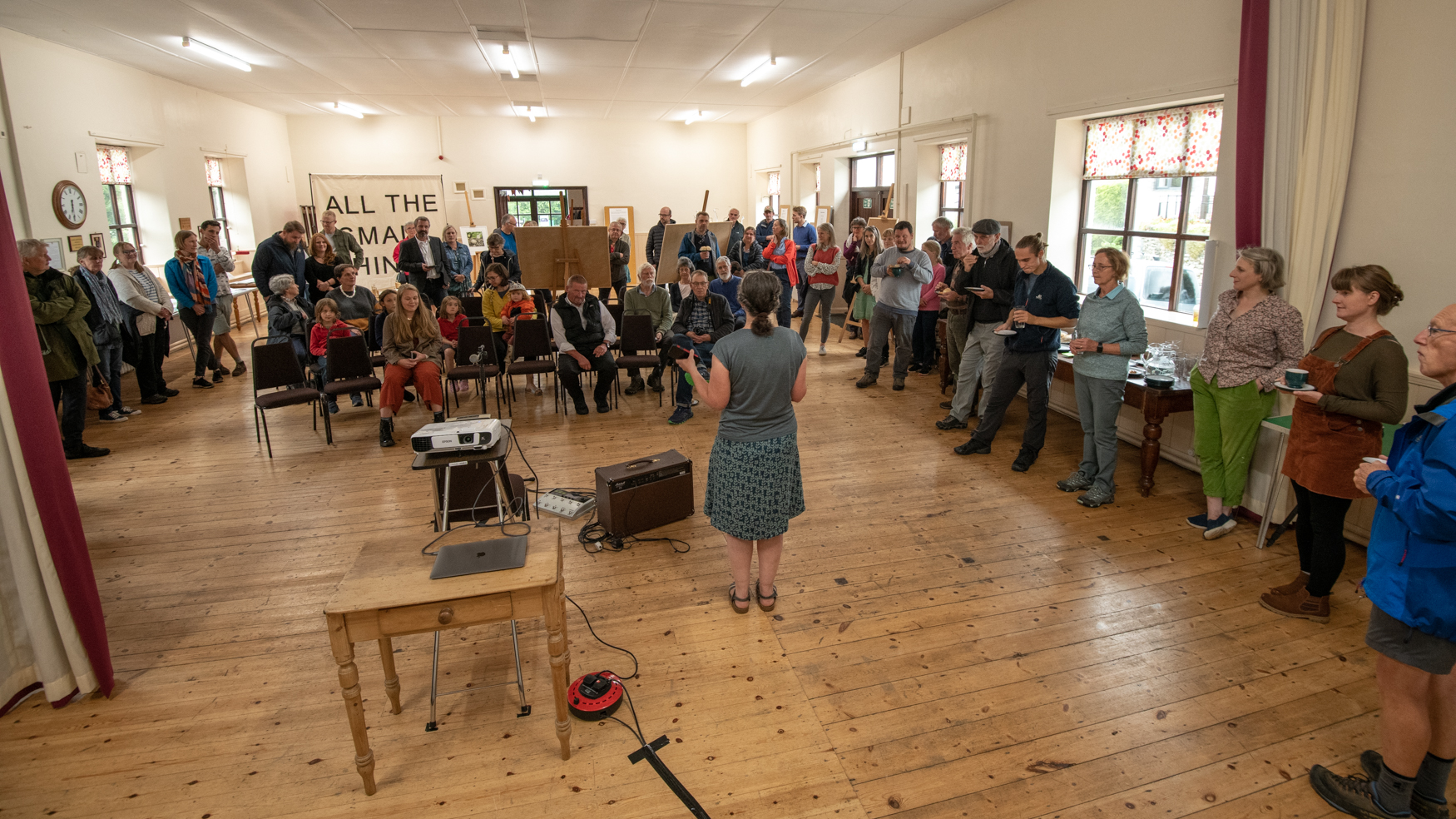
A range of perspectives, and some provocations, were shared through the event and exhibition in Glenridding village hall in July. More than 300 people came to see the work, and the conversations are ongoing.
“Watershed will provide a case study for the Cumbria People and Nature Network, and its findings will be shared with farmers, land owners, land management organisations, local groups, retailers and national conservation NGOs, who are taking part throughout.”
I was delighted to be invited to take part in WATERSHED, one of 5 artists to respond to the voices of the land as an Honorary Research Fellow of the University of Cumbria.
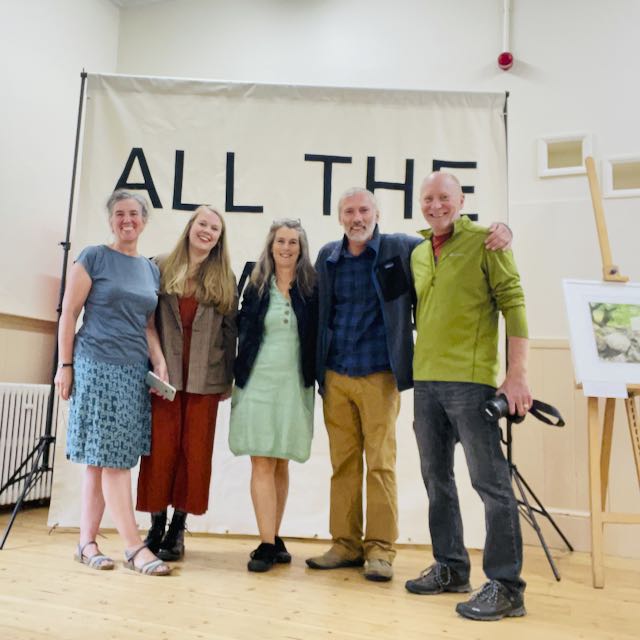
Artists: Harriet Fraser, Rob Fraser, Kate Gilman Brundrett, Matt Sharman, Sarah Smout.
Showing poetry, film, photography, music, installation, illustration, collage, and opportunities for participation.
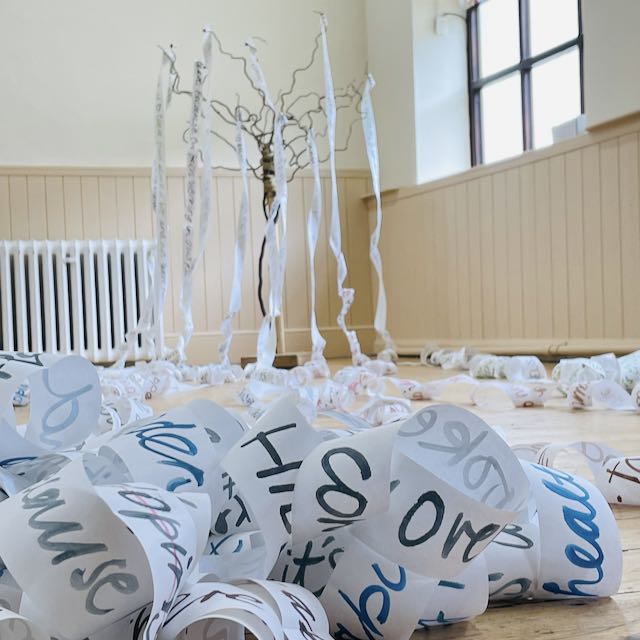
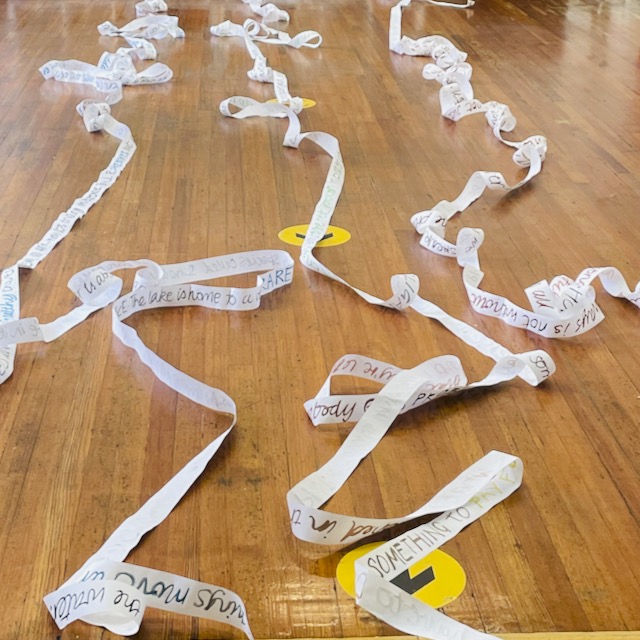
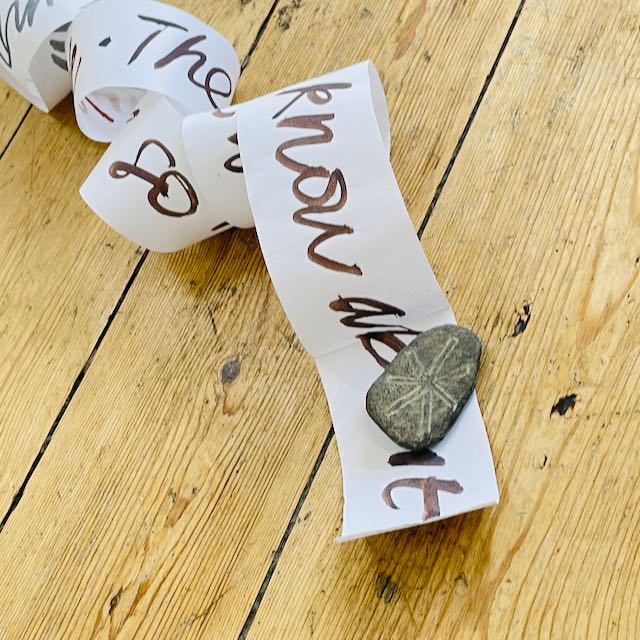
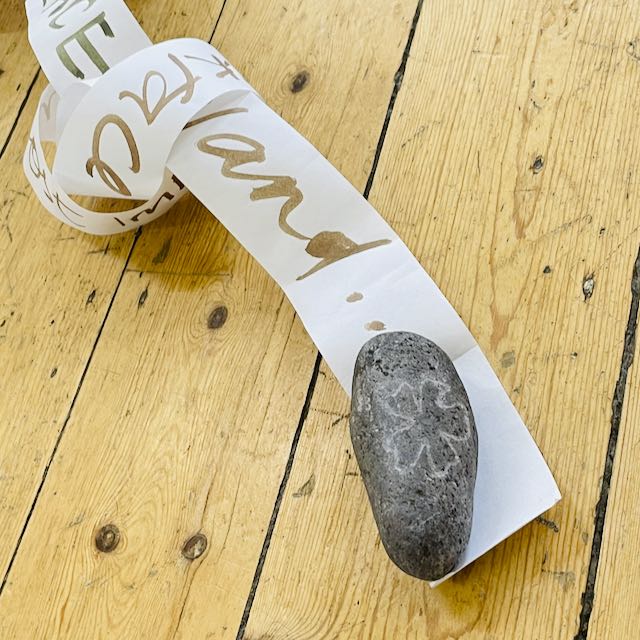
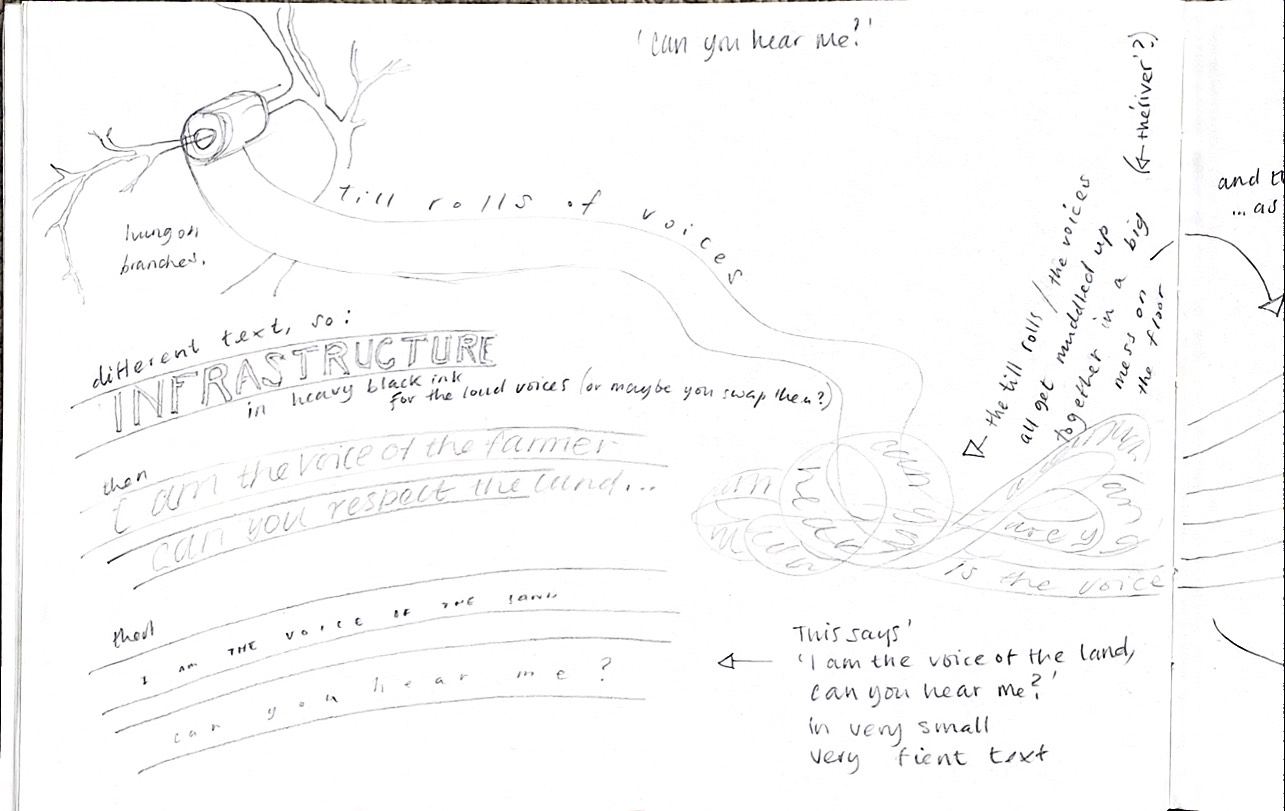
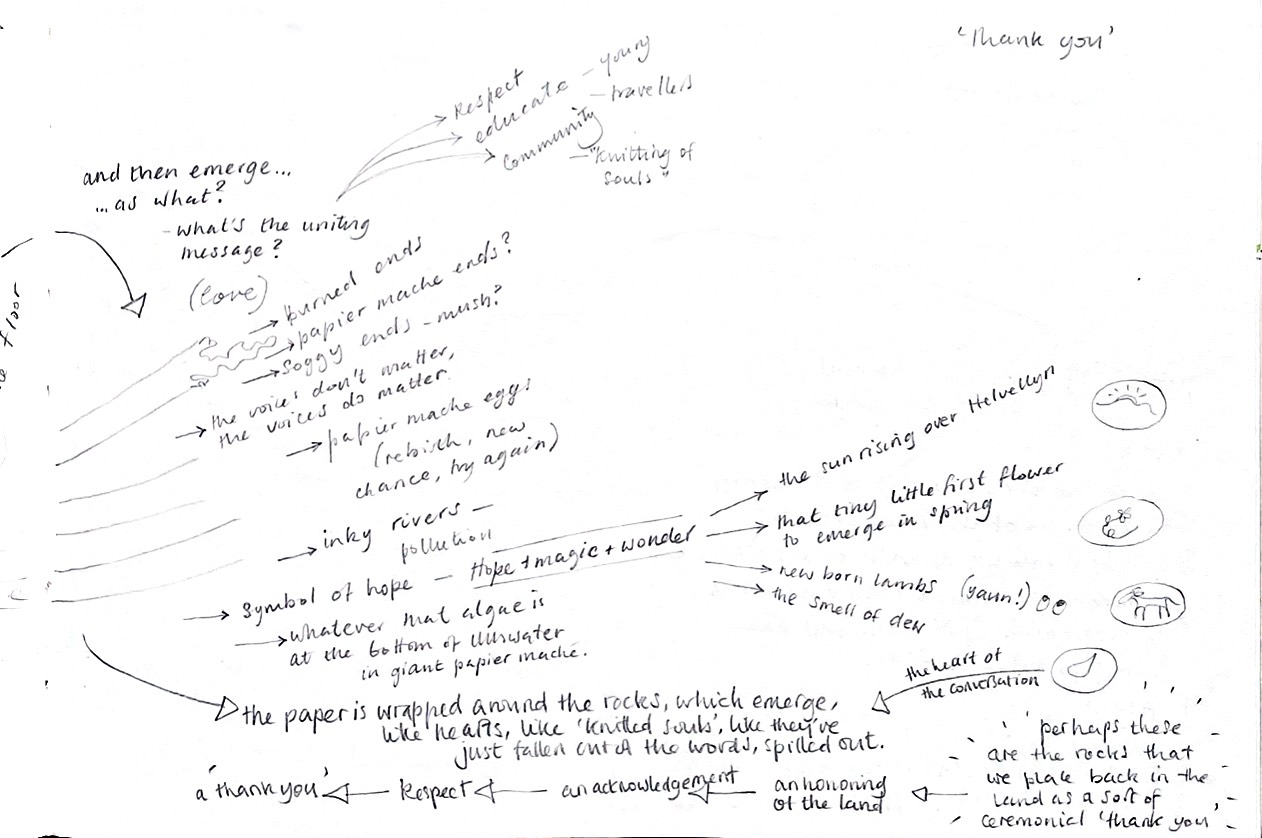
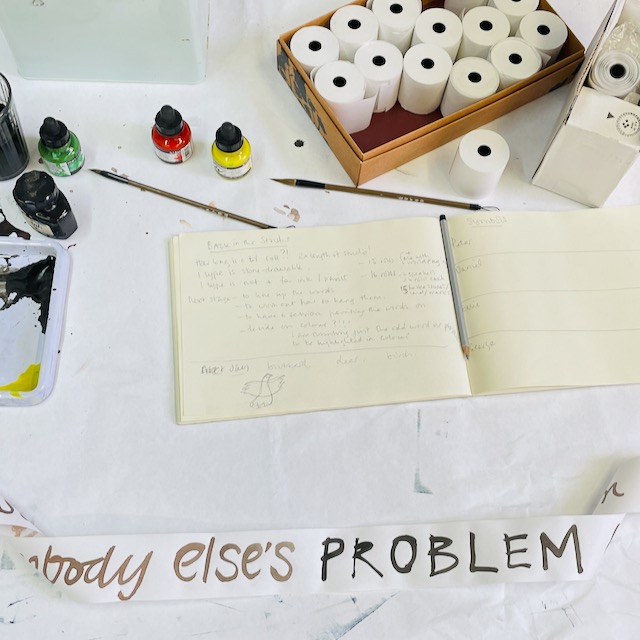
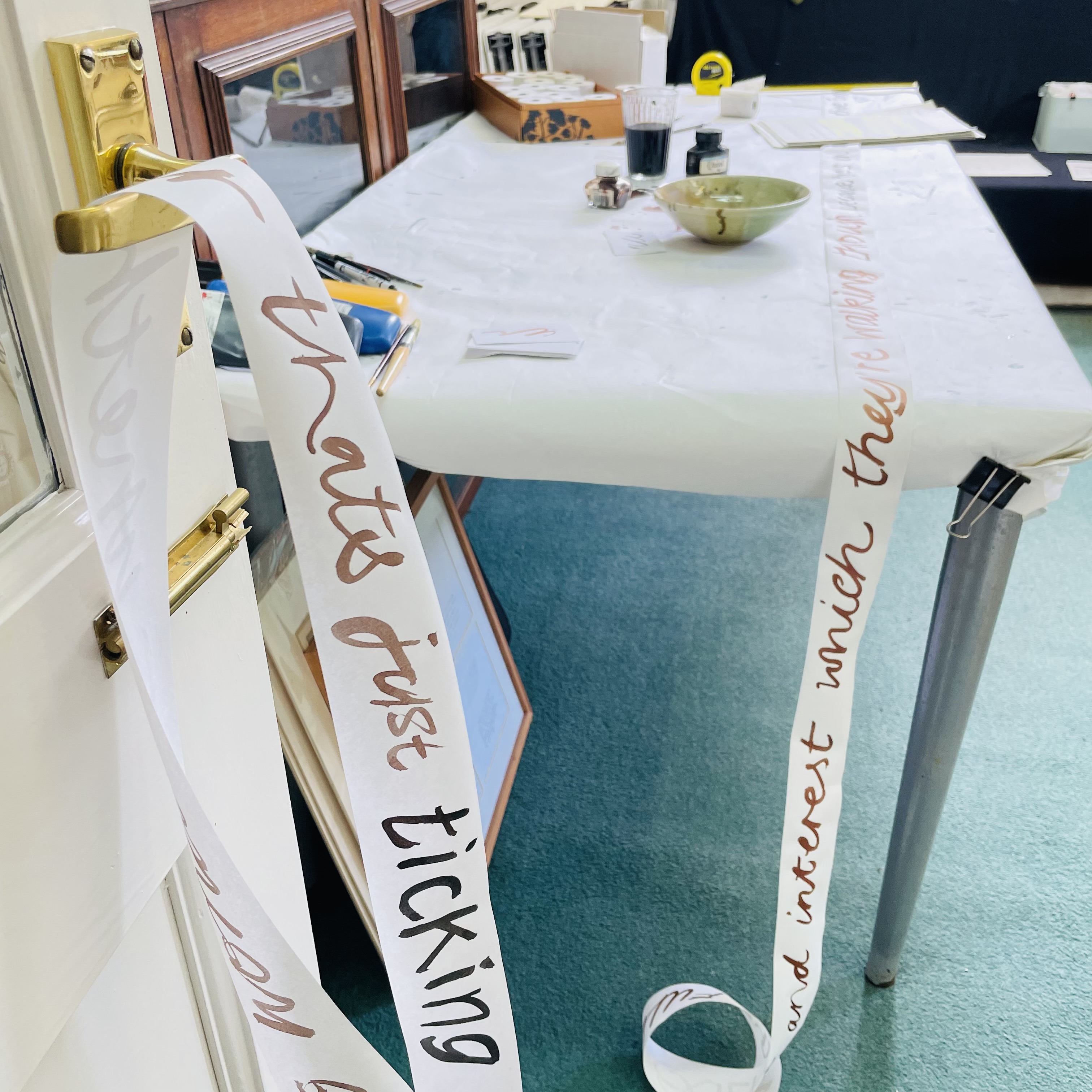
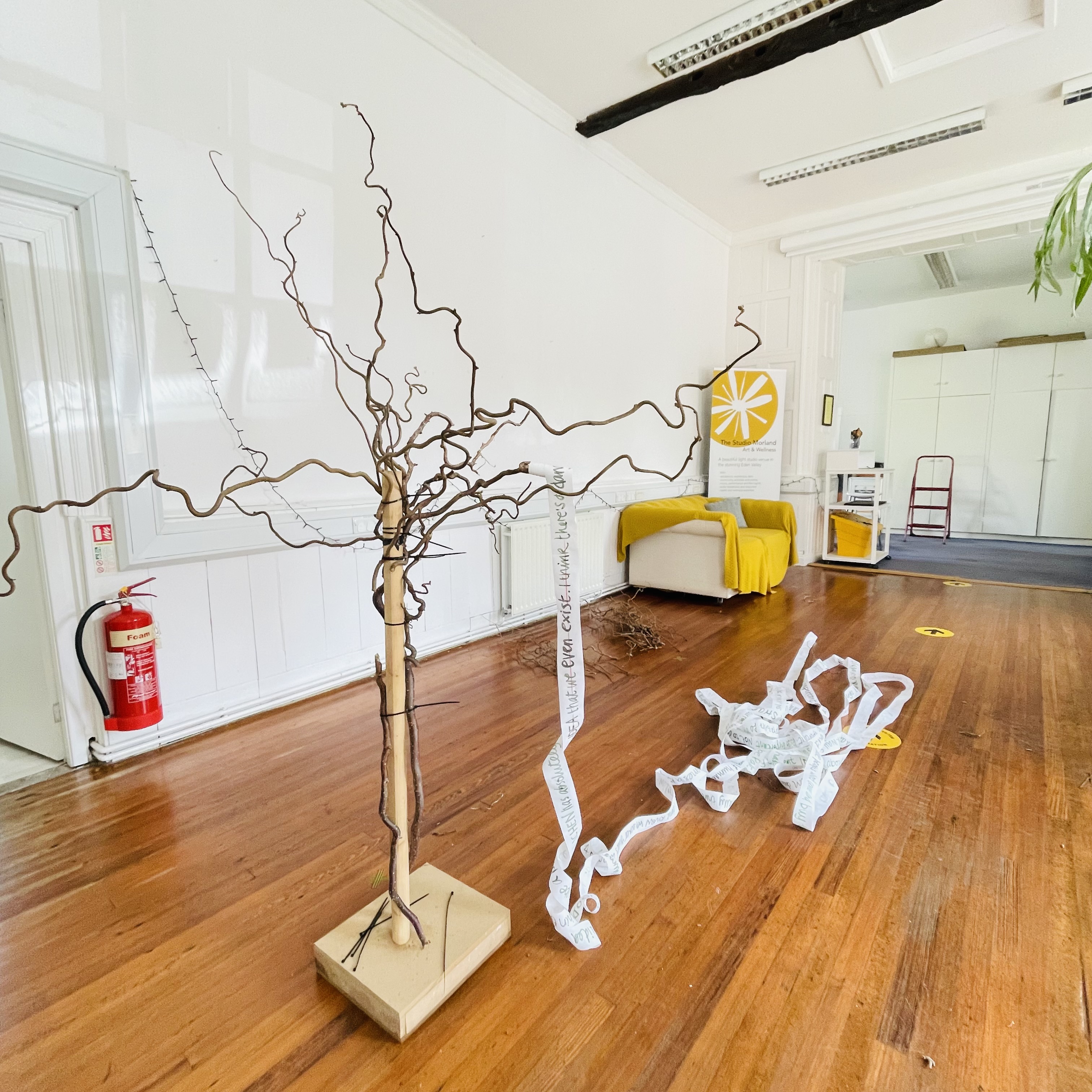
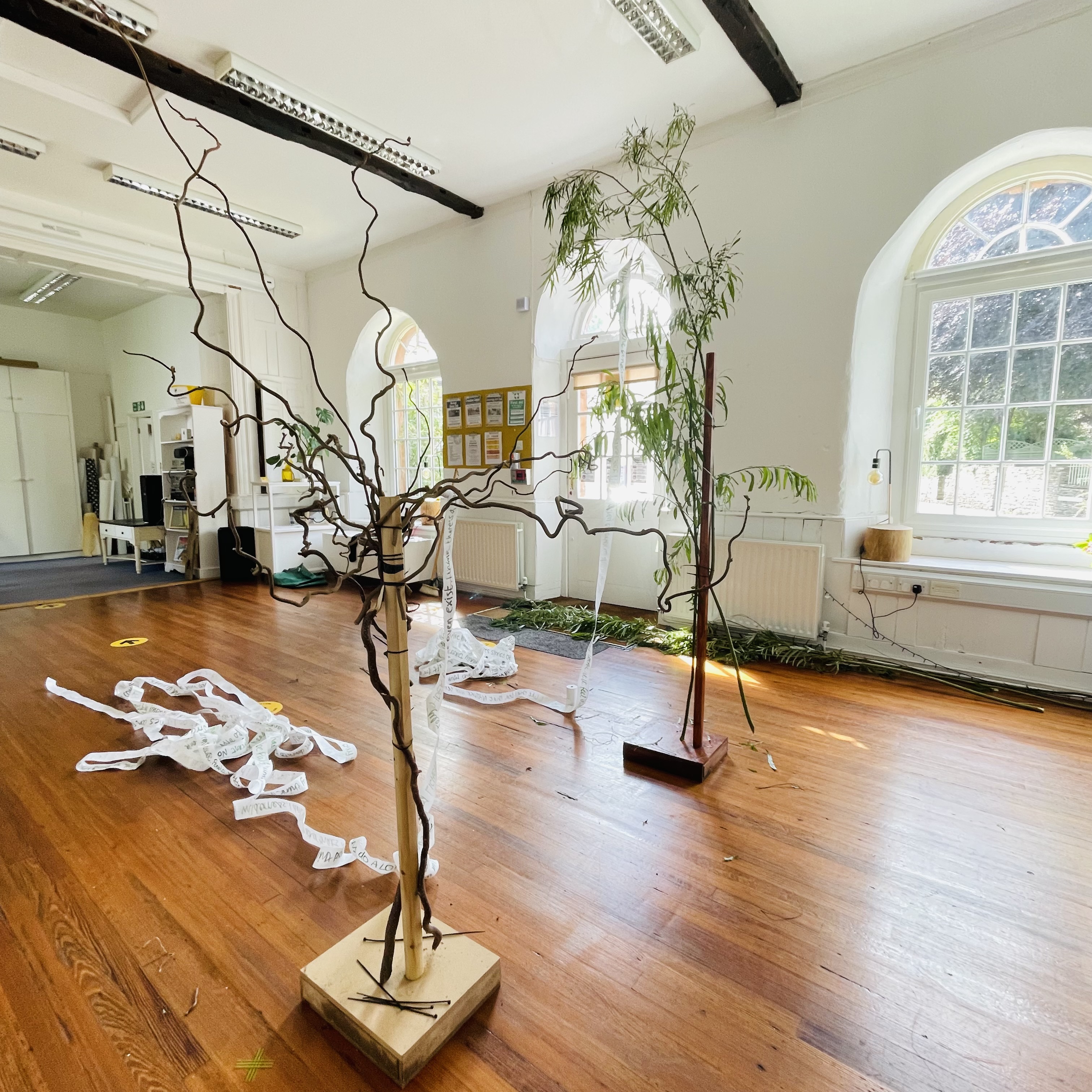
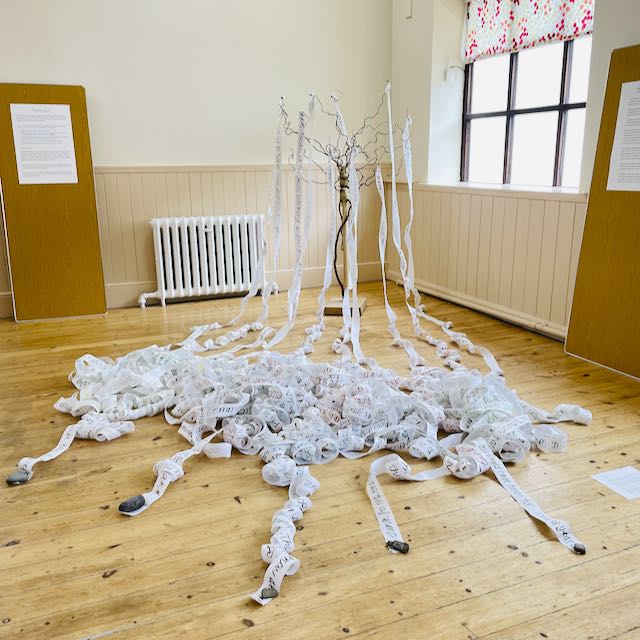
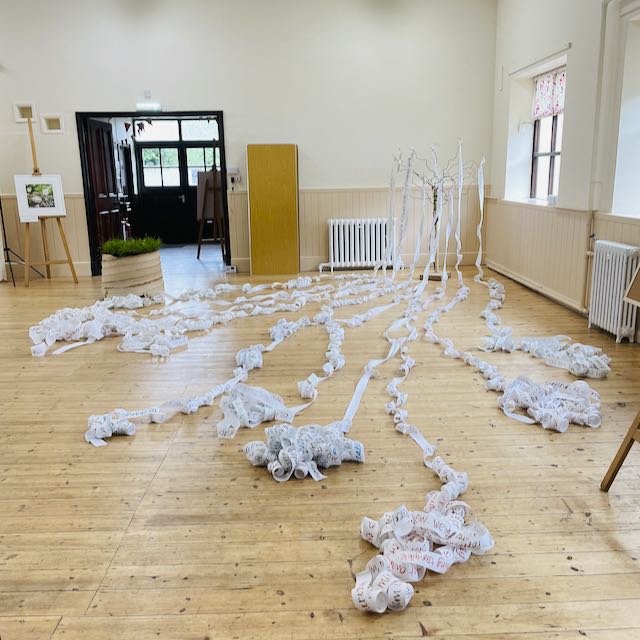
WATERSHED used the arts as a vehical to highlight the voices and issues in the landscape – our environment. My response used till rolls – saved from my mum’s floristry shop – to capture aspects of the 5 interviews, which were tehn presented in a dynamic waterfall-like display, cascading into a pool of conversation. What came out of the ‘froth’ were pebbles taken from each location and engraved with the thing that connected the interviewees to the land. These ‘heart stones’ I found to represent the connectedness amongst the words and debates about land use.
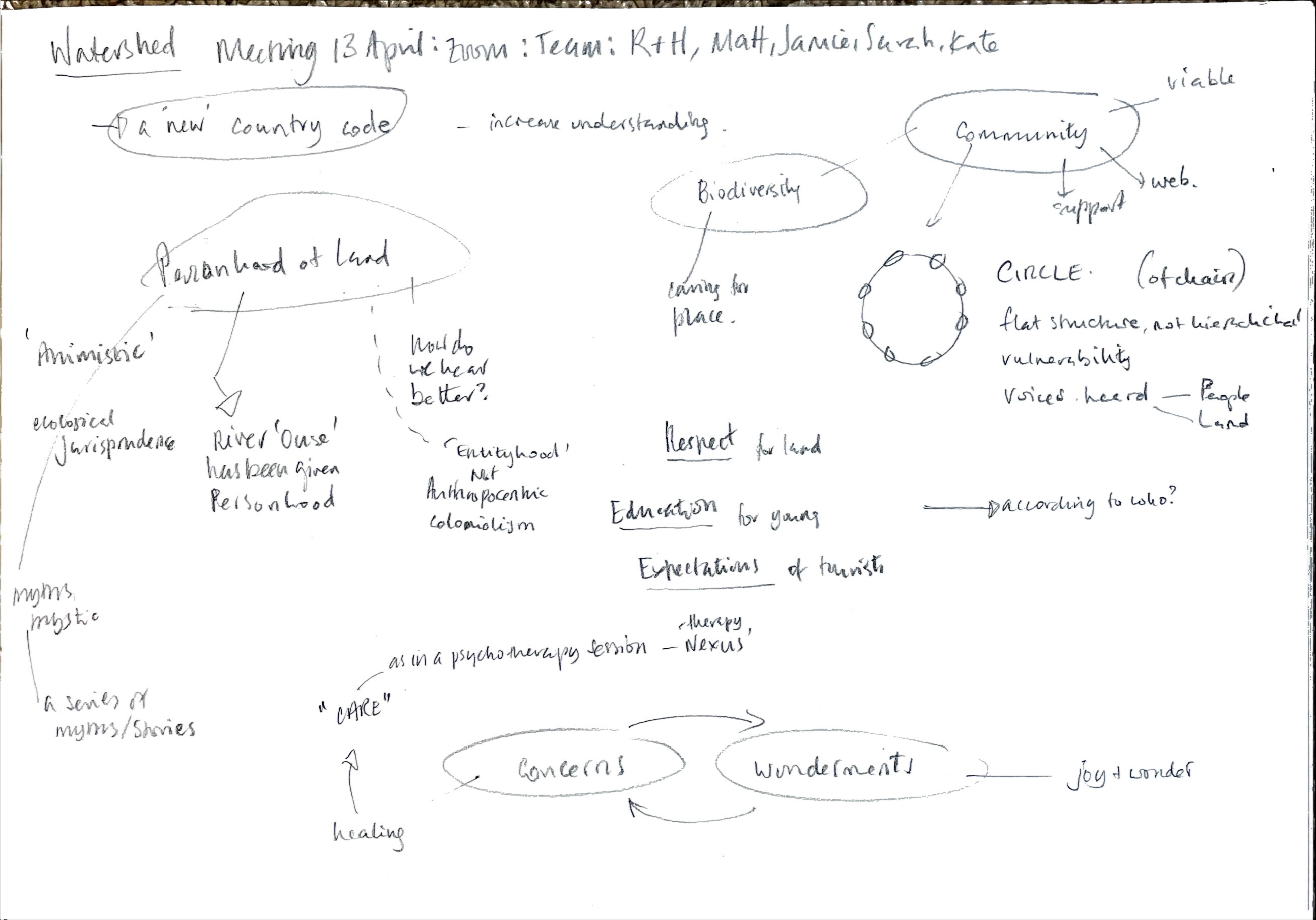
Watershed emphasises participation and collaboration. It is being led by Harriet Fraser in connection with her arts practice and PhD study at Cumbria University with a team of artists from the PLACE Collective. It combines independent practice with collaboration, with work inspired by attention to the concerns and perspectives of people who are connected to this valley. From the start, planning has included conversations with people who live and/or work here, in farming, land management, conservation and tourism.
The project is funded by the UKRI ‘Enhancing Research Culture‘ fund, and is being run through the University of Cumbria, with Dr Jamie Mcphie as Principle Investigator . It is a short pilot study that enquires into what happens when a group of artists and local participants find a number of ways for dialogues to evolve – indoors, but mostly out of doors: among woodlands, farms and fells, along the lake, and sometimes in it.
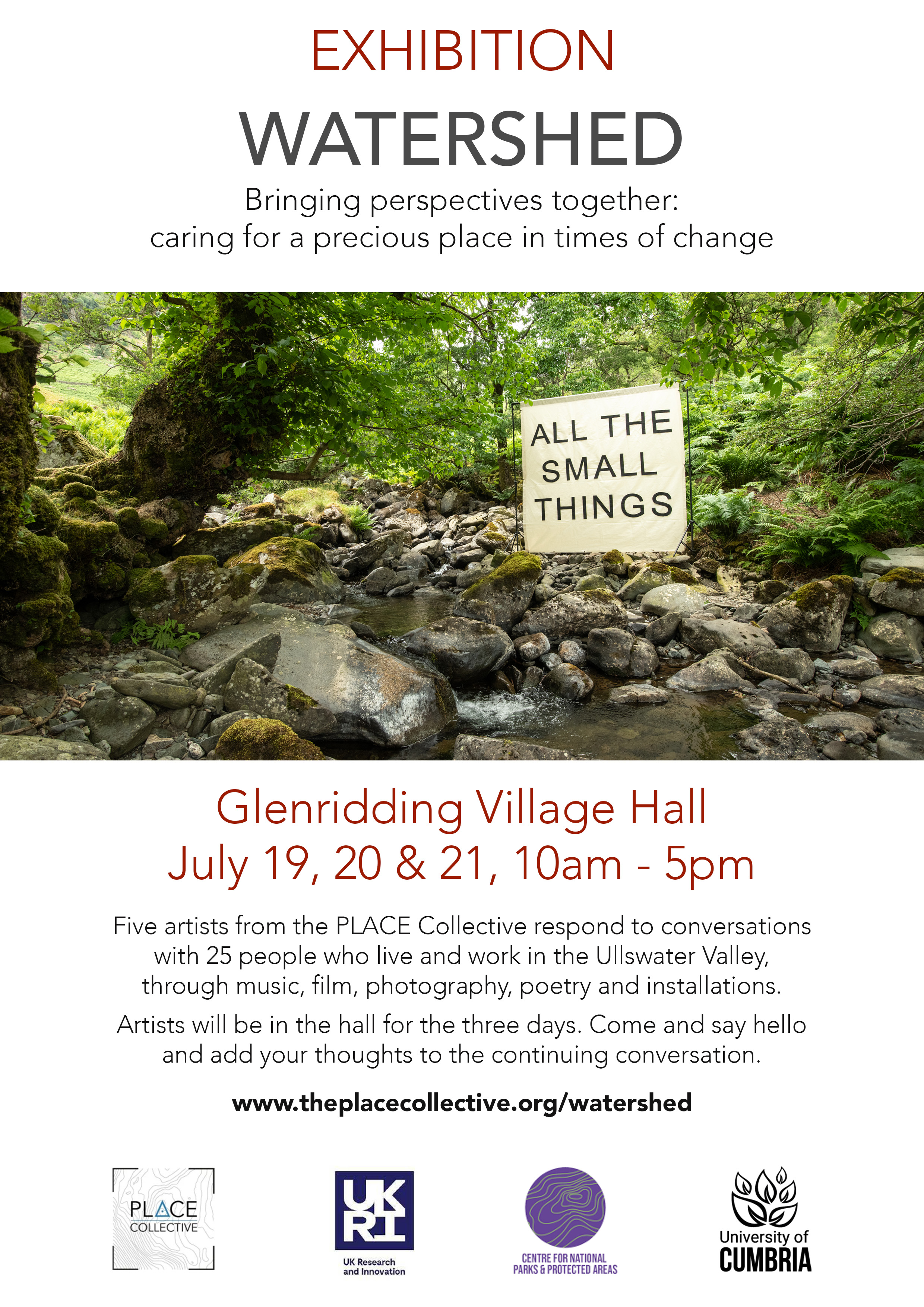
WATERSHED EXHIBITION
GLENRIDDING VILLAGE HALL, ULLSWATER VALLEY, CUMBRIA.
Open at Glennridding Village Hall July 19th – 21st, 2023.
More info on the PLACE Collective website WATERSHED